Best sheet pans
Quick answer
The Nordic Ware Naturals Half Sheet ($22.75) is the best all-around pick because a half sheet at 18 by 13 inches is the largest pan that reliably fits a standard home oven, unlike a commercial full sheet pan at 26 by 18 inches.

Nordic Ware Naturals Half Sheet - USA Made Aluminum Commercial Quality Sheet Pan for Baking or Roasting, Encapsulated Galvanized Steel Rim Prevents Warping, 1-Pack
A full commercial sheet pan measures 26 by 18 inches, which does not fit inside a standard home oven since most home ovens are only about 22 to 24 inches wide on the inside. A half sheet at roughly 18 by 13 inches is the largest pan size that reliably fits, which is exactly what the Nordic Ware Naturals Half Sheet is sized to. It is made from uncoated aluminum, which conducts heat quickly and evenly for roasting vegetables or baking a full tray of cookies.
The three tiers
Beginner: Best first pot
someone who needs one reliable pan for roasting and baking without committing to a full multi-piece set- Beginner pick
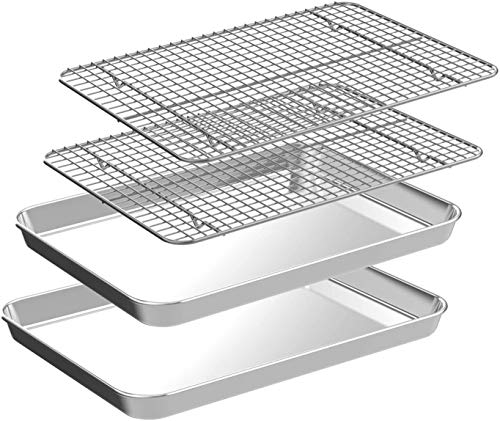
Nordic Ware Naturals Quarter Sheet with Oven-Safe Nonstick Grid
$14.88 Check pricePrices change often

The Nordic Ware Naturals Quarter Sheet with Oven-Safe Nonstick Grid is $14.88 and pairs a smaller quarter sheet pan, about 13 by 9 inches, with a fitted cooling and roasting rack. The smaller footprint fits easily in a toaster oven or alongside other pans in a full-size oven, and the included rack lets fat drip away from bacon or chicken thighs while they roast, which a flat pan alone cannot do.
Not for: anyone regularly roasting a full tray of vegetables or baking a full batch of a dozen or more cookies at once, since a quarter sheet has noticeably less usable surface area than a half sheet
Intermediate: Best value
a home cook who wants the correctly sized workhorse pan for roasting, sheet-pan dinners and cookiesThe Nordic Ware Naturals Half Sheet is $22.75 and is made in the USA from aluminum, the size and material combination most professional and serious home bakers actually reach for. At roughly 18 by 13 inches, it is the largest pan size that reliably fits inside a standard home oven, since a true full sheet pan at 26 by 18 inches does not. Aluminum conducts heat fast and evenly, which browns roasted vegetables and bakes cookies more consistently than a thinner, cheaper steel pan.
Not for: someone who wants a nonstick coating built into the pan itself rather than relying on parchment paper or a light coat of oil for release
Expert: Performance ceiling
someone who bakes or roasts often enough to want a matched multi-pan set instead of buying pans one at a time
The Nordic Ware Naturals 3 Piece Set is $40.00 and covers multiple pan sizes from the same USA-made aluminum line, which means one oven session can run a half sheet of roasted vegetables and a smaller pan of cookies side by side without mismatched gauges heating differently. Buying a matched set upfront is also usually cheaper per pan than buying the same three sizes individually over time.
Not for: someone who only ever bakes or roasts one tray at a time and does not need multiple sizes in rotation, since a single half sheet covers the vast majority of everyday baking and roasting tasks on its own
| Product | Price | Size | Material |
|---|---|---|---|
| Nordic Ware Naturals Quarter Sheet with Grid | $14.88 | Quarter sheet, ~13x9 in | Aluminum with nonstick grid |
| Made In Quarter Sheet Pan | $19.00 | Quarter sheet | Commercial grade aluminum |
| Nordic Ware Naturals Half Sheet | $22.75 | Half sheet, ~18x13 in | Aluminum |
| Nordic Ware Naturals 3 Piece Set | $40.00 | Multiple sizes | Aluminum |
Will a full sheet pan fit in my oven?
No, in almost every home kitchen. A true full sheet pan is 26 by 18 inches, a standard size built for the wide, deep ovens found in commercial bakeries and restaurants. A typical home oven has an interior width of roughly 22 to 24 inches, which is narrower than the 26 inch length of a full sheet pan, so it simply will not slide onto a home oven rack.
This is one of the most common sizing mistakes in bakeware shopping, since full sheet pans are sold on general marketplaces without always making clear they are commercial-sized. A half sheet pan at roughly 18 by 13 inches is the size actually built to fit inside a home oven, with room left on both sides for heat to circulate around the pan.
Why do professional bakers prefer half sheet pans over other sizes?
A half sheet pan hits a practical sweet spot: it is large enough to roast a full tray of vegetables or bake a full dozen or more cookies in one batch, but it still fits a home oven with clearance on all sides for even air circulation, which a pan sized any closer to the oven's interior width would not allow.
Because half sheet pans are also the standard commercial size scaled down, professional-style aluminum half sheet pans are widely available at reasonable prices, since manufacturers already produce them at scale for restaurant supply. That is part of why a half sheet pan is often less expensive per square inch of usable cooking surface than a specialty-shaped pan of a similar quality tier.
What size sheet pan do I need for cookies versus roasting vegetables?
A half sheet pan handles both tasks well, but the two uses stress a pan differently. Cookies bake at a moderate, steady temperature and mostly test how evenly a pan conducts heat, which is where aluminum's fast, even heat conduction shows up as more consistent browning across a full tray. Roasting vegetables often uses higher heat and produces more moisture and fat runoff, which is where a pan's edge height and overall sturdiness under high heat matter more.
A quarter sheet pan, at roughly 13 by 9 inches, is a reasonable choice for smaller households baking a half batch of cookies or roasting a single portion of vegetables, but it will not hold a full recipe of either without needing a second pan or overcrowding the first one.
Should I buy a rimmed or a flat sheet pan?
A rimmed sheet pan, which is what most people mean by a sheet pan in the first place, has a raised edge on all four sides that contains fat, marinade and juices released during roasting, which a completely flat cookie sheet does not do. For roasting vegetables, meat or anything that releases liquid, a rimmed pan is the correct choice and prevents drips from running onto the oven floor.
A flat, rimless cookie sheet is designed specifically so cookies can be slid off the pan easily with a spatula, since a rim can get in the way of that motion. For a single all-purpose pan meant to cover both roasting and baking, a rimmed half sheet pan is the more versatile choice, since cookies bake perfectly well on a rimmed pan even though a flat sheet is a small convenience for that one task specifically.
How we chose
This guide is researched from published manufacturer dimensions, material specifications and patterns across verified owner reviews, not from hands-on baking or side-by-side oven testing. Pan dimensions cited here come directly from manufacturer listings, and the standard oven interior width used for comparison (roughly 22 to 24 inches) reflects widely published home oven specifications rather than a single tested unit.
Sizing accuracy was weighted heavily, since the most common mistake in this category is a shopper buying a pan labeled full sheet, which is sized for commercial kitchens and does not fit a home oven. Material (aluminum versus steel) and whether a listing included a nonstick coating or a companion rack were weighed as secondary factors within each price tier.
Buying tips
What is the difference between a half sheet and a full sheet pan?
A true full sheet pan measures 26 by 18 inches, the standard size used in commercial bakery and restaurant ovens, and it does not fit inside a typical home oven, which is usually only about 22 to 24 inches wide on the inside. A half sheet pan, at roughly 18 by 13 inches, is exactly half that size and is the largest pan that reliably fits a home oven with room to spare on both sides for air to circulate. Anyone shopping for a home kitchen should be looking at half sheet pans, not full sheet, even though full sheet pans are sometimes sold to home cooks online without a clear warning that they will not fit.
Aluminum, aluminized steel or stainless steel, which is best for a sheet pan?
Uncoated aluminum conducts heat the fastest and most evenly of the common sheet pan materials, which produces the most consistent browning on roasted vegetables and baked goods, and it is the material most professional bakeware favors. Aluminized steel, a steel core with an aluminum coating, is more resistant to warping under high heat than pure aluminum and is a common choice for commercial-style baking sheets sold to home cooks. Stainless steel sheet pans are more durable and resistant to staining but conduct heat less evenly than aluminum, which can mean less consistent browning across the pan.
Why does my sheet pan warp in the oven?
Warping happens when one part of a thin metal pan heats and expands faster than another part, usually from an uneven oven temperature or from a cold pan going into a fully preheated hot oven. Thinner, lighter-gauge pans are more prone to this than heavier-gauge pans, which is one reason a slightly heavier aluminum or aluminized steel pan is worth the modest extra cost over the thinnest budget option. A pan that warps usually flattens back out once it cools, but repeated warping over years of use can eventually leave a permanent bend.
Do I need a nonstick coating on a sheet pan?
A nonstick coating is not necessary if parchment paper or a light coat of oil is used consistently, and many serious bakers actually prefer an uncoated aluminum pan specifically because parchment paper gives cleaner release than most nonstick coatings while avoiding any concerns about coating breakdown at high roasting temperatures. A built-in nonstick coating is more of a convenience for quick weeknight roasting without setting up parchment each time, but it typically will not tolerate the highest oven temperatures as well as bare aluminum.
How do I keep a sheet pan from discoloring over time?
Uncoated aluminum sheet pans naturally darken and develop a mottled, uneven look over months of regular high-heat roasting, which is a cosmetic change and does not affect how the pan cooks. Avoiding harsh abrasive scrubbers and steel wool slows this discoloration somewhat, as does lining the pan with parchment or foil for messier roasting jobs like meat with a sugary glaze. Soaking a stained pan in warm water with a little baking soda or a dedicated bakeware cleaner lifts most surface discoloration without damaging the metal, though a fully darkened, well-used pan is a normal sign of a workhorse pan rather than a defect.
Other options worth knowing about
- Made In
Made In Cookware - Quarter Sheet Pan - Commercial Grade Aluminum - Professional Bakeware
$19.00 Check pricePrices change often


Common questions
What size is a half sheet pan?
A standard half sheet pan measures approximately 18 by 13 inches, which is exactly half the size of a commercial full sheet pan at 26 by 18 inches. This half sheet size is what fits inside a typical home oven, which usually has an interior width of about 22 to 24 inches, too narrow to fit a full sheet pan.
Can a full sheet pan fit in a home oven?
Generally no. A full sheet pan measures 26 by 18 inches, which is wider than the interior of most home ovens, typically about 22 to 24 inches across. Full sheet pans are sized for the larger ovens used in commercial bakeries and restaurants, so a half sheet pan at roughly 18 by 13 inches is the correct size to shop for a home kitchen.
Is aluminum or steel better for a sheet pan?
Aluminum conducts heat faster and more evenly than steel, which generally produces more consistent browning on roasted food and baked goods, and it is the material most professional-quality sheet pans use. Steel, particularly aluminized steel, resists warping slightly better under repeated high heat, which is a reasonable tradeoff for some buyers, but most serious home bakers still favor aluminum for its heat performance.
How do I stop food from sticking to my sheet pan?
Lining the pan with parchment paper before adding food is the most reliable way to prevent sticking on any sheet pan, coated or uncoated, and it also makes cleanup significantly faster. A light, even coat of oil brushed or sprayed directly onto the pan works as well for foods like roasted vegetables, though it requires more attentive scraping during cleanup than parchment does.
Do I need more than one sheet pan?
Owning at least two half sheet pans is genuinely useful, since many sheet-pan dinners and baking sessions call for one tray in the oven while a second is being prepped, or for splitting a large batch of cookies or vegetables across two pans instead of overcrowding one. A single half sheet pan covers most everyday needs, but a second is a low-cost upgrade that removes a common kitchen bottleneck.