How to season cast iron
Quick answer
Seasoning is a thin layer of oil that has been polymerized onto the surface of cast iron by heat, not a manufactured coating, and it is built by rubbing on a very thin layer of oil and heating the pan until the oil breaks down and bonds to the metal, usually repeated several times.
The chemistry of oil polymerization onto iron is established food science; specific oven temperatures and timing follow widely used conventions rather than a single fixed standard.
| Problem | Cause | Fix |
|---|---|---|
| Sticky, tacky surface after seasoning | Oil applied too thickly | Scrub back and re-season with a much thinner layer |
| Rust spots | Moisture left on bare or thin seasoning | Scrub to bare metal, dry fully, re-season from scratch |
| Seasoning flaking off | Layer built up too fast without curing | Strip back and rebuild with several thin coats |
| Food sticking despite seasoning | Pan not preheated, or seasoning too thin | Preheat fully before cooking; add another maintenance coat |
| Dull, patchy finish | Uneven oil application | Wipe oil evenly across the whole surface before heating |

What seasoning actually is
Seasoning is a layer of polymerized oil bonded directly to the iron surface, built up through repeated cycles of heat. It is not paint, not a factory-applied nonstick coating, and not something you buy pre-finished in a permanent state. When oil is heated past its smoke point on bare iron, it breaks down and cross-links into a hard, plastic-like polymer that fills the microscopic pores of the metal and creates a slick, semi-nonstick surface.
This matters because it explains both why seasoning works and why it needs maintenance. A polymerized layer is a real chemical bond, so light scuffs and cooking do not destroy it in normal use, but it is a thin organic layer sitting on metal, not steel or ceramic, so anything that strips oil or scrapes hard enough will remove it and expose bare iron underneath.
Why cast iron needs seasoning and stainless does not
Cast iron is porous at a microscopic level and will rust quickly if left bare and wet, unlike stainless steel, which resists corrosion on its own. Seasoning solves two problems at once: it gives the porous iron surface a protective, non-reactive layer, and it fills in those pores enough to create a release surface for food that bare cast iron could never provide.
Most cast iron cookware today ships pre-seasoned from the factory with a thin working layer already in place, which is enough to cook on immediately, but that factory layer is usually thinner than what builds up over months of home seasoning and cooking.
The initial seasoning process
Start with a clean, dry pan. Wash a new pan with warm water and a small amount of soap to remove any factory wax or shipping residue, since this first wash is the one exception to the "never use soap" rule; the seasoning layer has not been built yet so there is nothing to strip. Dry it completely, including a few minutes on low heat on the stove to drive off any lingering moisture from the crevices around handles and rivets.
Rub a very thin layer of a high smoke point oil over the entire pan, inside and out, including the handle. The word thin matters more than the choice of oil: too much oil pools and turns into a sticky, tacky film instead of a hard polymer layer, which is the most common seasoning mistake. Wipe the pan down with a clean cloth until it looks almost dry to the touch before it goes anywhere near heat.
- Wash and fully dry the bare pan
- Apply an extremely thin, wiped-back layer of oil over the whole surface
- Heat upside down in the oven with a tray underneath to catch drips
- Let the pan cool fully in the oven before handling
- Repeat two to three more thin coats for a stronger base layer
Maintaining seasoning day to day
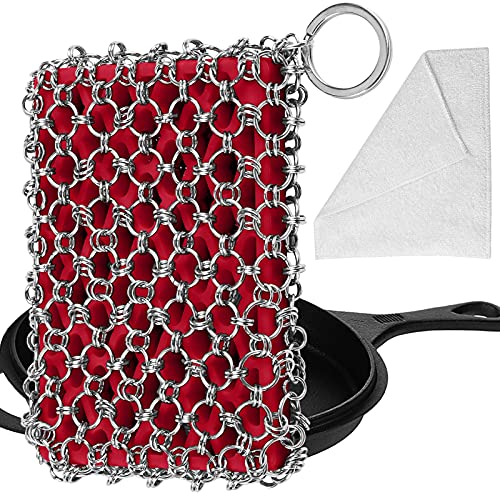
Ongoing seasoning happens automatically every time you cook with oil or fat in the pan and let it heat, which is why a cast iron pan used often for frying and searing tends to build a better surface over time than one used rarely. After cooking, clean the pan while it is still warm, using hot water and a stiff brush or a chainmail scrubber rather than soap-heavy scrubbing or a dishwasher, both of which strip oil out of the seasoning layer faster than normal cooking rebuilds it.
Dry the pan completely and immediately after washing; residual moisture sitting on bare or thin spots is the fastest route to rust. A light wipe of oil after drying, buffed back until the surface looks matte rather than greasy, keeps the layer topped up between uses.
What actually damages seasoning
Three things reliably strip seasoning: heavy detergent use, prolonged acidic cooking, and the dishwasher. Detergent is designed to break down oils and grease, which is exactly what seasoning is, so an aggressive scrub with dish soap removes polymerized oil the same way it removes cooking grease. Long, acidic simmers, tomato sauce held at a rolling simmer for an extended time being the classic example, slowly dissolve the seasoning layer through sustained acid contact. The dishwasher combines detergent, prolonged soaking and heat cycles in a way that strips seasoning faster than any of those factors alone.
None of this means cast iron is fragile. A quick tomato-based saute or an occasional soap wash will not undo months of seasoning. The damage comes from sustained exposure, not a single meal.
Rust is a setback, not a death sentence
Rust on cast iron looks alarming but is almost always fully recoverable, because rust only affects the surface, not the structural iron underneath. If rust appears, scrub it back to bare, silver-grey metal using steel wool or a stiff abrasive pad and water, dry the pan completely, and re-season from the initial seasoning process as if it were new. There is no rust damage to cast iron that re-seasoning cannot fix short of an already-cracked or warped pan.
Common seasoning mistakes
Applying too much oil is the single most common mistake and produces a sticky, uneven, tacky surface rather than a hard polymer layer; the fix is always less oil, wiped back further than feels necessary. Skipping the fully-dry step before oiling traps moisture under the new layer and can cause pitting. Seasoning over food residue instead of a clean pan bakes that residue into the new layer permanently.
Gear for this job
- TOPULORS
TOPULORS Cast Iron Chainmail Scrubber, 316L Stainless Steel Cleaner 8x6 in
6 in$6.39 Check pricePrices change often - Herda
Herda 316L Cast Iron Scrubber Cleaner, Large Cast Iron Chain Mail Scrubber
$14.95 Check pricePrices change often - BLACKSTONE
BLACKSTONE Griddle Seasoning and Cast Iron Conditioner, 15.3oz
$25.99 Check pricePrices change often - Lodge
Lodge Cast Iron Double Dutch Oven, 2-in-1 Pot and Skillet Combo, 5 Quart
5 qt$59.90 Check pricePrices change often - Lodge
Lodge Pre-Seasoned Cast Iron Deep Camp Dutch Oven with Lid, 8 Quart
8 qt$89.95 Check pricePrices change often



Common questions
What is cast iron seasoning made of?
Seasoning is oil that has been heated past its smoke point on bare iron until it breaks down and polymerizes into a hard, plastic-like layer bonded to the metal. It is not a manufactured coating applied at the factory in a permanent form; it is built and maintained through repeated heating cycles with oil, both during initial seasoning and ordinary cooking.
Can I use soap on cast iron?
A small amount of soap is fine for the very first wash on a brand new, unseasoned pan, since there is no seasoning layer yet to strip. Once seasoning is built up, avoid heavy detergent use going forward, since it breaks down oils the same way it breaks down cooking grease, and repeated soap-heavy washing will thin the seasoning faster than normal cooking rebuilds it.
Is rust on cast iron dangerous or does it ruin the pan?
Rust on cast iron is a surface problem, not a structural one, and does not ruin the pan. Scrub the rust off down to bare, silver-grey metal with steel wool, dry the pan completely, and re-season it from the initial seasoning steps. A rusted pan that has been properly cleaned and re-seasoned performs the same as before.
Why did my cast iron seasoning turn out sticky?
A sticky, tacky seasoning layer almost always means too much oil was applied before heating. Excess oil pools instead of forming a thin, even polymer film, so it stays gummy rather than curing hard. The fix is to scrub the tacky layer back and reapply a much thinner coat, wiped until the pan looks nearly dry before it goes into the oven.
Can I put cast iron in the dishwasher?
No. Dishwashers combine detergent, prolonged water exposure and heat cycles, all of which strip seasoning faster than normal hand washing or cooking rebuilds it. Cast iron should be washed by hand with hot water and a stiff brush or chainmail scrubber, then dried completely and lightly oiled.
Does cooking acidic food in cast iron damage the seasoning?
Brief acidic cooking, such as a quick tomato saute, will not meaningfully harm a well-seasoned pan. Extended acidic contact, like simmering a tomato sauce for a long stretch, can slowly dissolve the seasoning layer through sustained acid exposure. Well-seasoned cast iron can handle occasional acidic dishes; it is prolonged simmering that causes gradual wear.