Enameled vs Bare Cast Iron
Quick answer
Buy the Lodge Essential Enamel Dutch Oven ($72.99) for tomato sauces, wine braises and acidic soups; buy the Lodge Pre-Seasoned Cast Iron Dutch Oven ($79.90) for cornbread, campfire cooking and dishes that benefit from a well-seasoned, higher-heat surface.

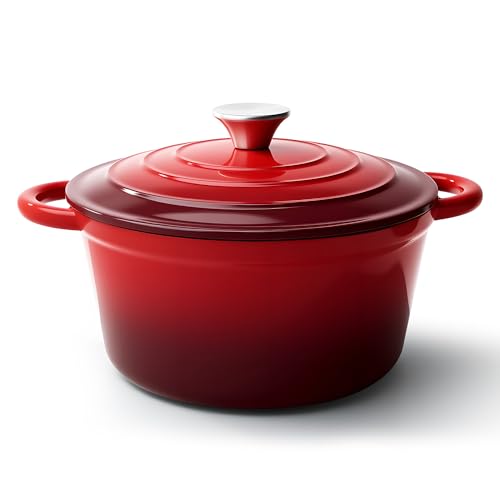
Lodge Essential Enamel Cast Iron Dutch Oven, 6 Quart, Island Spice Red
6 qtAcidic braises, tomato-based sauces, and wine reductions that would otherwise strip seasoning from bare cast iron over a long cook.
| Enameled Cast Iron | Bare Cast Iron | |
|---|---|---|
| Surface | Glass-like enamel coating, inert | Seasoned bare iron |
| Acidic cooking | Safe for long acidic braises | Long acid exposure strips seasoning |
| Seasoning needed | No | Yes |
| Thermal shock risk | Enamel can chip or crack | Not applicable, no coating |
| Oven safe temperature | Often 500F, check lid knob rating separately | Very high, limited mainly by handle material |
| Open flame or coals | Not recommended | Well suited |
| Price, 6-quart | $72.99 | $79.90 |
What the enamel coating actually changes
Enameled cast iron is bare cast iron fused with a layer of glass-like porcelain enamel, both inside and out. That coating creates a completely inert cooking surface, meaning it does not react with food the way bare metal or a seasoning layer can, and it does not need seasoning at all to resist sticking or rust. The enamel is applied in a high-temperature firing process similar to how enamel coatings are applied to bathtubs or other metal fixtures, which is what gives it that hard, glossy, glass-like finish.
The tradeoff is that the enamel is a hard, brittle glass coating rather than a flexible metal seasoning layer, so it can chip or crack under sudden temperature swings or a hard impact against a metal utensil or the edge of a sink, damage that bare cast iron simply cannot suffer since it has no coating to chip in the first place. A small interior chip is mostly cosmetic if it does not expose bare metal, but a larger chip that reaches the iron underneath can eventually rust if moisture sits against it.
Why acidic cooking is the real dividing line
Tomato sauces, wine reductions, vinegar-based braises, and citrus-heavy dishes are the classic case for enameled cast iron. Because the enamel surface is inert, it has no seasoning to strip, so a pot of marinara or a wine-braised short rib can simmer for hours without stripping a protective layer or picking up a metallic taste.
Bare cast iron's seasoning is a layer of polymerized oil, and sustained contact with acid slowly breaks that layer down over long cook times. A quick deglaze with wine or a splash of vinegar at the end of cooking is generally fine on well-seasoned cast iron, but hours-long acidic braises are exactly the scenario where bare cast iron loses seasoning fastest and enameled cookware has a clear advantage. Stripped seasoning is not permanent damage, but it does mean re-seasoning the pan before it returns to its usual nonstick performance, an extra step that enameled cookware never requires.
Temperature limits and thermal shock
Enameled Dutch ovens from brands like Le Creuset publish oven-safe ratings around 500F for the pot itself, but the lid knob is often the actual limiting factor, not the enamel. A phenolic plastic knob is commonly rated to only about 375F, well below what the enameled pot body can handle, so a recipe calling for a hotter oven can damage the knob even though the pot and lid are fine. Bare cast iron has no such limitation when it uses an all-metal lid and handles, letting it go into much hotter ovens, onto coals, or directly over an open flame.
Enamel is a glass coating, and like any glass, it can crack or craze from a sudden, extreme temperature change, such as adding cold liquid to a very hot empty pot, or setting a hot pot directly onto a cold, wet countertop. This is the single most common way enameled cookware gets damaged, and it is entirely avoidable by preheating gradually and letting the pot cool before washing. Bare cast iron does not have this failure mode since it has no glass coating to crack.
Seasoning, cleaning, storage, and daily handling
Enameled cast iron needs no seasoning at all and can generally be cleaned with soap and a normal sponge, since there is no oil layer to protect or preserve. It should still avoid metal utensils and abrasive scouring pads, which can scratch or dull the enamel over time. Bare cast iron needs regular seasoning maintenance: drying immediately after washing, a light coat of oil after each use, and avoiding standing water, which will cause rust on exposed metal.
Enameled cast iron should be stored with a paper towel or cloth between the pot and lid if stacked with other cookware, since direct metal-on-enamel contact during storage is a common, avoidable way small chips happen over time. When moving either Dutch oven while hot, using both handles and thick, dry oven mitts is important, since a wet mitt or towel can allow heat to transfer through quickly and cause a burn.
Cost, color, weight, and capacity
At the entry level, a 6-quart Lodge enameled Dutch oven runs $72.99 while Lodge's bare cast iron camp Dutch oven of the same size runs $79.90, putting both in the same budget range for a first Dutch oven. One practical advantage enameled cast iron has is a range of exterior colors, since the coating can be tinted, while bare cast iron is always the same dark gray finish; this is purely cosmetic and has no bearing on cooking performance.
Both Dutch ovens compared here hold 6 quarts, a size that comfortably handles a whole chicken, a large batch of soup, or bread baked inside the covered pot, with base weight broadly similar between the two since the enamel coating adds only a modest amount compared to the underlying iron. Smaller households might prefer a 5-quart size, while anyone batch-cooking regularly may want a larger capacity in whichever material they choose.
Premium enameled brands, priced well above the Lodge line, generally justify their higher cost through tighter manufacturing tolerances, a heavier gauge of cast iron, and a longer track record of the enamel holding up to decades of daily use rather than through any fundamentally different acid-safety benefit, since the basic inert-enamel-over-iron principle is the same across price tiers.
Searing performance and how each surface releases food
Bare cast iron, once properly seasoned, develops a genuinely nonstick surface for fatty foods like bacon or a well-oiled steak, and it can be preheated hot enough for a deep, dark sear without worrying about damaging a coating. Enameled cast iron can also sear well, since the enamel tolerates high stovetop heat, but the smoother, glassier enamel surface does not build the same natural release that a well-used bare cast iron seasoning layer provides over years of cooking fatty foods.
For browning meat before a braise, both surfaces work, though many recipes that call for a Dutch oven specifically use it for the braising or baking stage after an initial sear done in a separate bare cast iron or carbon steel skillet, which sidesteps this difference entirely for cooks who own both types of pans.
Which one to buy first
If braising, tomato sauces, or wine-based cooking are a regular part of the menu, the Lodge Essential Enamel Dutch Oven at $72.99 is the better first purchase, since it removes acid as a maintenance concern entirely. If campfire cooking, cornbread, or high-heat dry cooking matter more, the Lodge Pre-Seasoned Cast Iron Camp Dutch Oven at $79.90 tolerates rougher conditions and higher heat without risking a chipped or crazed enamel finish. Many serious home cooks eventually own one of each, since they solve genuinely different problems, with the enameled pot handling the acidic, low-and-slow side of the menu and the bare pot handling everything that benefits from a well-seasoned, high-heat surface.
Bare Cast Iron (Lodge Camp Dutch Oven)

Lodge Pre-Seasoned Cast Iron Deep Camp Dutch Oven with Lid, 6 Quart
6 qtCornbread, campfire and coal cooking, and dishes where a well-seasoned surface and higher heat tolerance matter more than acid resistance.
Both sides of this comparison
- JANSKA
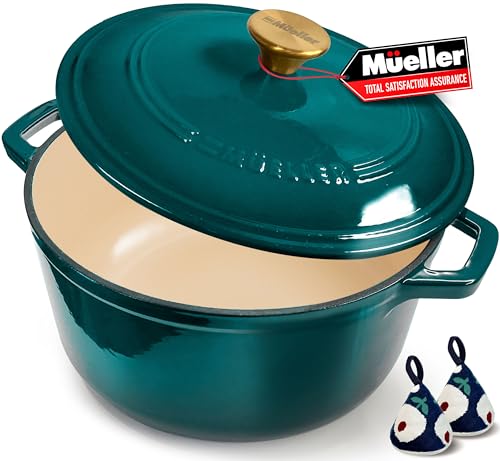
Mueller DuraCast 6 Quart Enameled Cast Iron Dutch Oven Pot with Lid
6 qt$52.97 Check pricePrices change often - Lodge
Lodge Pre-Seasoned Cast Iron Deep Camp Dutch Oven with Lid, 8 Quart
8 qt$89.95 Check pricePrices change often - Le Creuset
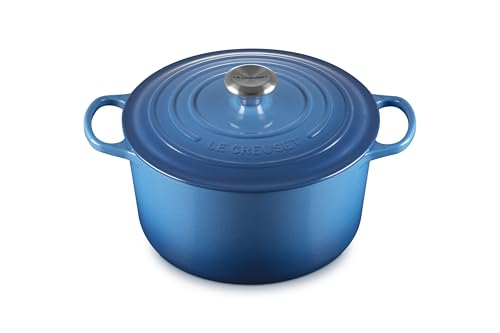
Le Creuset Enameled Cast Iron Signature Deep Round Oven, 6.5 qt., Marseille
6.5 qt$289.95 Check pricePrices change often - Le Creuset
Le Creuset Enameled Cast Iron Round Dutch Oven, 7.25 qt., Cerise
7.25 qt$325.99 Check pricePrices change often


Safety
Common questions
Can I cook tomato sauce in bare cast iron?
A quick tomato-based dish is generally fine on well-seasoned cast iron, but long simmers of several hours will slowly strip the seasoning layer through sustained acid contact. For regular tomato sauces or wine braises, enameled cast iron is the safer long-term choice since its coating is inert and does not rely on seasoning.
Why did my enameled Dutch oven crack?
Enamel is a glass-like coating and cracks or crazes from thermal shock, most often from adding cold liquid to a very hot empty pot or setting a hot pot onto a cold, wet surface. Preheating gradually and letting the pot cool before washing prevents most of this damage, since the enamel itself is durable under normal cooking temperatures.
Do I need to season an enameled Dutch oven?
No. The enamel coating is inert and does not require seasoning to prevent sticking or rust, unlike bare cast iron. Regular soap and water cleaning is sufficient, though metal utensils and harsh scouring pads should still be avoided to protect the enamel's finish over time.
What temperature is safe for an enameled Dutch oven?
Many enameled Dutch ovens are rated around 500F for the pot itself, but check the lid knob separately, since phenolic plastic knobs are commonly rated only to about 375F and are often the actual limiting factor, not the pot body or enamel coating.
Is bare cast iron better for campfire cooking?
Yes. Bare cast iron has no glass enamel coating to crack under direct flame or coals, and it typically uses all-metal lids and handles rather than components with lower temperature limits. This makes it far better suited to open-fire cooking than enameled cast iron, which risks thermal shock damage in that environment.
Which lasts longer, enameled or bare cast iron?
Both can last for decades with proper care, but they fail differently. Bare cast iron can rust if left wet or unseasoned, but rust can usually be scrubbed off and the pan re-seasoned. Enamel damage, like a chip or crack from thermal shock, is generally permanent and can expose bare metal underneath to rust at the damaged spot.