Wood vs Plastic Cutting Board
Quick answer
Buy the John Boos Chop-N-Slice Maple Cutting Board ($48.95) for everyday prep and knife-edge friendliness; buy the OXO Good Grips 2-Piece Plastic Cutting Board Set ($27.95) as a dedicated, dishwasher-safe board for raw meat and poultry.

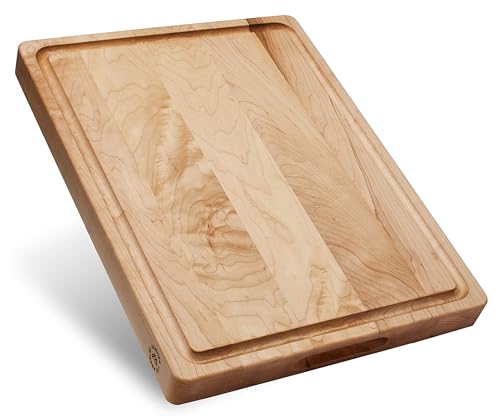
John Boos Chop-N-Slice Series Rectangular Maple Cutting Board
Everyday vegetable and general prep where protecting the knife edge and long-term durability matter more than dishwasher convenience.
| Wood | Plastic | |
|---|---|---|
| Dishwasher safe | No | Yes |
| Kindness to knife edge | Gentle, especially end grain | Harder on the edge than wood |
| Best use | Vegetables, bread, general prep | Raw meat, poultry, fish |
| Cleaning method | Hand wash, dry standing up, oil periodically | Dishwasher or hot soapy water |
| Durability | Years with maintenance | Replace once heavily scarred |
| Price | $48.95 | $27.95 |
Why the dishwasher question decides raw meat prep
Wooden cutting boards cannot go in the dishwasher. The heat and prolonged water exposure warp and crack wood over repeated cycles, which is why every wood board, including the John Boos Chop-N-Slice Maple board, comes with hand-wash-only care instructions. That single limitation is the main reason wood is not the recommended choice for raw meat and poultry, where thorough sanitizing after each use matters most. This is a structural limitation of wood as a material, not a flaw specific to any one brand or price tier of wood board.
Plastic boards, like the OXO Good Grips set, are dishwasher safe, which allows for a hot wash cycle after cutting raw chicken, fish, or beef that gets the board far more thoroughly sanitized than hand washing alone. This is the practical reason plastic is the standard recommendation for raw protein prep in both home and commercial kitchens, and it is a big part of why commercial kitchens in particular standardize on color-coded plastic boards for different raw ingredient types.
What actually happens to a board's surface during cutting
Every knife cut leaves a small groove in a cutting board's surface, and those grooves are where bacteria from raw meat can hide, away from a simple wipe-down or rinse. On a plastic board, those grooves can be sanitized effectively in a dishwasher's hot water and detergent cycle, since plastic does not absorb moisture the way wood does.
On a wood board, deep grooves cannot be dishwasher sanitized, so bacteria trapped in cut marks from raw meat prep have to rely on wood's naturally occurring antimicrobial properties and hand washing alone, which is less reliable than a dishwasher cycle for something like raw chicken.
Research into wood's natural properties has found that certain wood species draw moisture, and the bacteria carried in it, down into the wood fibers below the surface, where the bacteria gradually die off rather than multiplying on the surface the way they can on a non-absorbent material left damp. This property is genuinely useful, but it works over time between uses, not instantly, which is why it cannot substitute for a proper hot wash after cutting raw meat.
Knife edge wear: end grain, plastic, and what to never cut on
End grain cutting boards, like many higher-end maple and walnut boards, are built from short sections of wood turned so the fibers point straight up rather than running flat across the surface. That construction lets the wood fibers separate slightly and close back around the blade with each cut, which is meaningfully gentler on a knife's edge than any plastic surface. Flat-grain wood boards, like the John Boos Chop-N-Slice, are still kinder to a knife edge than plastic, since wood is naturally softer than the plastic polymers used in cutting boards.
Plastic cutting boards are a harder, more rigid surface than wood, so the blade edge takes more direct impact with every cut, dulling a knife faster over time, a real tradeoff for the sanitizing convenience plastic offers. Glass and stone cutting boards are worse still, dulling a knife edge almost immediately since they offer no give at all under the blade; neither wood nor plastic has this problem, which is why both remain the standard recommendation over glass or stone.
Caring for wood, replacing plastic, and cost over time
Wood boards need occasional oiling with a food-safe mineral oil to prevent the wood from drying out and cracking, along with hand washing and standing the board on its edge to dry rather than laying it flat where water can pool. Avoid soaking a wood board or leaving it wet for extended periods, since prolonged moisture exposure causes warping and cracking, the main failure modes for wood cutting boards.
Plastic boards should be replaced once they develop deep, heavily scarred grooves that no longer clean up well even in the dishwasher, since those grooves are exactly where bacteria can persist despite washing. A quality wood board like the John Boos Chop-N-Slice costs more upfront at $48.95 but can realistically last many years with care, while a plastic set like the OXO Good Grips 2-Piece at $27.95 costs less initially but needs replacing sooner, making the long-term cost per year closer between the two materials than the upfront price alone suggests.
A wood board can occasionally be lightly sanded to smooth out surface grooves and refresh the cutting surface, extending its useful life well beyond a plastic board's typical replacement point, since plastic cannot be resurfaced the same way once its grooves become too deep. This sanding should be followed by a fresh coat of mineral oil before the board goes back into regular use.
Size, thickness, and storage
A cutting board's material is only part of what makes it useful day to day; size and thickness matter just as much. A larger board suits big jobs like breaking down a chicken, while a smaller board is easier to maneuver for quick tasks like slicing a single onion, which is part of why the OXO Good Grips set includes two sizes rather than one. Thinner plastic boards can slide around on a countertop more easily than a thick wood board, which is why some plastic boards include textured feet or a non-slip edge.
Store wood and plastic boards separately and let both dry completely before stacking them away, since trapped moisture between two boards can encourage mold growth on wood in particular. Standing boards upright in a slotted holder helps both materials dry faster, and labeling a dedicated raw meat board, even with a small marker mark on the edge, helps prevent accidentally grabbing it for vegetables that will not be cooked afterward.
Odor and staining differences worth knowing
Wood boards, especially those used regularly for onions, garlic, or fish, can hold onto odors more stubbornly than plastic, since the wood fibers absorb some of the food's oils and volatile compounds along with any moisture. A scrub with coarse salt and a cut lemon, followed by a normal wash, usually lifts most lingering odors from a wood board without needing anything harsher.
Plastic boards are less prone to absorbing odor but can stain more visibly from strongly colored foods like beets or turmeric, since the harder plastic surface shows discoloration on top rather than absorbing it below the surface the way wood does. Neither issue affects food safety, but they are worth knowing before choosing which board to reach for on a given task.
Building a two-board system
The most practical setup for most kitchens is a dedicated wood board for vegetables, bread, cheese, and general prep, paired with a dedicated plastic board reserved specifically for raw meat, poultry, and fish. The John Boos Chop-N-Slice Maple board at $48.95 covers the wood side well, and the OXO Good Grips 2-Piece Plastic Cutting Board Set at $27.95 provides two dishwasher-safe boards, enough to separate raw poultry from raw fish or beef if needed.
Plastic (OXO Good Grips)

OXO Good Grips 2-Piece Plastic Cutting Board Set - Double-Sided
2 piecesRaw meat, poultry, and fish prep where dishwasher sanitizing and a lower price for a dedicated, easily replaced board matter most.
Both sides of this comparison
- thetchry
THETCHRY Plastic Cutting Board Set of 3-Cutting Boards for Kitchen BPA Free
$9.99 Check pricePrices change often - GORILLA GRIP
GORILLA GRIP BPA-Free Reversible Kitchen Cutting Board, Set of 3, Black
$21.99 Check pricePrices change often - BABILONIA
Walnut Wood Cutting Board for Kitchen, End Grain Chopping Boards
$43.99 Check pricePrices change often - Sonder Los Angeles
Sonder Los Angeles Winsome Hard Maple Wood Cutting Board, 17x13x1.5 in
$99.99 Check pricePrices change often - Sonder Los Angeles
Sonder Los Angeles Alfred Cutting Board, End Grain Walnut, 17x13x1.5 in
$179.99 Check pricePrices change often



Common questions
Can I put a wood cutting board in the dishwasher?
No. The heat and sustained water exposure in a dishwasher will warp and crack a wood cutting board over time. Wood boards should be hand washed with warm soapy water, rinsed, and dried standing on edge rather than laid flat.
Is wood or plastic better for cutting raw chicken?
Plastic is the better choice for raw chicken and other raw meat or poultry, since it can be sanitized thoroughly in a dishwasher's hot water cycle. Wood cannot go in the dishwasher, so it relies on hand washing alone, which is less reliable for sanitizing the deep grooves that knife cuts leave behind.
Does cutting on plastic dull my knife faster than wood?
Yes. Plastic is a harder, more rigid surface than wood, so a knife edge takes more direct impact with each cut. Wood, especially end grain wood, is softer and lets the blade sink in slightly, which is gentler on the edge and means less frequent honing and sharpening over time.
What is the worst material to cut on?
Glass and stone cutting boards dull a knife edge almost immediately because they offer no give under the blade at all. Both wood and plastic are far better choices for any board that will see regular knife work, with glass and stone better suited to serving rather than cutting.
How do I keep a wood cutting board from cracking?
Oil it periodically with a food-safe mineral oil to prevent the wood from drying out, avoid soaking it or leaving it wet for long periods, and dry it standing on edge rather than flat after washing. Consistent care like this lets a quality wood board last for years without warping or cracking.
How many cutting boards do I actually need?
At minimum, two: a wood board for vegetables, bread, and general prep, and a separate plastic board dedicated to raw meat, poultry, and fish that can be sanitized in the dishwasher after each use. Some kitchens add a third plastic board specifically to separate raw poultry from raw fish or beef.